Mostrando entradas con la etiqueta nervous system. Mostrar todas las entradas

viernes, 25 de marzo de 2011

Peripheral Nervous System (P.N.S)

The peripheral nervous system (PNS) consists of all the nerves and ganglia outside the central nervous system (a ganglion is a mass of nerve cell bodies). They include nerves of external and internal organs. The PNS connects the CNS with all the parts of the body.
The peripheral nervous system is divided into two parts: the sensory division and the motor division. How these divisions of the peripheral nervous system are related to the rest of the nervous system is shown in Figure. Refer to the figure as you read more about the peripheral nervous system below.

The sensory division carries messages from sense organs and internal organs to the central nervous system. Human beings have several senses. They include sight, hearing, balance, touch, taste, and smell. We have special sense organs for each of these senses. Sensory neurons in each sense organ detect a certain type of stimulus, or input. For example, sensory neurons in the eyes detect light, and sensory neurons in the skin detect touch.
Our sense organs detect sensations, but they don’t tell us what we are sensing. That’s your brain’s job. The sense organs send messages about sights, smells, and other stimuli to the brain. The brain then interprets the messages. A particular area of the brain interprets information from each sense organ. For example, information from the nose is interpreted by the temporal lobe of the cerebrum.

The motor division of the peripheral system carries messages from the central nervous system to internal organs and muscles. As shown in Figure, the motor division is also divided into two parts:
The somatic nervous system
The autonomic nervous system.
The somatic nervous system carries messages that control the muscles and so the body movements.
The autonomic nervous system carries nerve impulses to internal organs. It is responsible for activities that are not under your control, such as sweating and digesting food. The autonomic nervous system has two divisions:
The sympathetic division of the autonomic nervous system is the division that prepares the body for stressful situations. It is often referred to as the "fight or flight" system. The effects of this system are numerous, but generally include increasing heart rate, constricting blood vessels to the skin and viscera (thereby increasing blood flow to muscles), increasing pupil size and decreasing salivation. These responses all promote survival in a dangerous situation.
The parasympathetic division of the autonomic nervous system prepares the body for restful situations and is often called the "rest and digest" system. Effects of the parasympathetic nervous system include slowing heart rate, increasing gastric motility, and increasing salivation. These responses help the body to recover as well as prepare for stressful situations by storing nutrients.
In this link you can find how acts each division.

domingo, 20 de marzo de 2011

Transmission of information

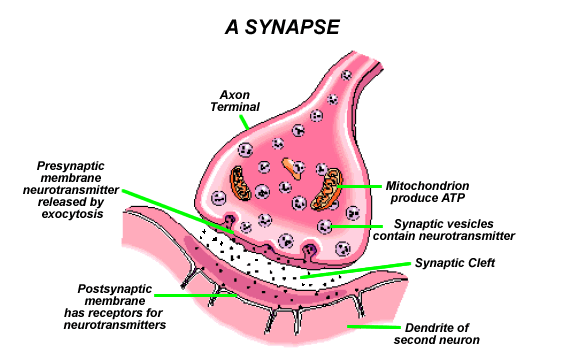
Neurones are electrically excitable cells, which means that they can transmit electrical nerve impulses.A nerve impulses are electrical charges that travels along the membrane of a neuron. But this electrical current can not pass directly from one to other neuron because between the end of an axon and the next dendrite there is no contact, there is a small gap and same structures known as synapse. Synapses are functional connections between neurons, or between neurons and other types of cellsRemember that a single neuron connects to thousands of other neurons.This is a drawing of a synapse:

We can difference three components
The presynaptic neuron is the transmitting cell, its axon terminal has a lot of vesicles full of neurotransmiters. A neurotransmitter is a chemical message that is used to relay electrical signals between a neuron and another cell
The possinaptic neuron is the receiving cell, It has a lot the neurotransmiter receptor in ist membrane.
The synaptic cleft is the gap between both. (about 20 nm wide)

When a nerve impulse reaches the axon terminal, it causes the neurotransmitter vesicles to fuse with the terminal membrane, and the neurotransmitter is released into the synaptic cleft.When the neurotransmitters diffuse across the synaptic cleft they bind to receptor proteins on the membrane of the postsynaptic cell and causes a nerve impulse to start on the membrane of this neuron.
This video can help to understand the process (action potential is as nerve impulse is transmitted)

miércoles, 16 de marzo de 2011

Two systems

Your body has two systems that help you maintain homeostasis: the nervous system and the endocrine system. The nervous system is a complex network of nervous tissue that sends electrical and chemical signals. The nervous system includes the central nervous system (CNS) and the peripheral nervous system (PNS) together. The central nervous system is made up of the brain and spinal cord, and the peripheral nervous system is made up (mainly) of the nerves that lies outside the CNS.
The endocrine system is a system of glands around the body that release chemical signal molecules into the bloodstream. The electrical signals of the nervous system move very rapidly along nervous tissue, while the chemical signals of the endocrine system act slowly in comparison and over a longer period of time. Working together, the nervous and endocrine systems allow your body to respond to short or long term changes in your environment.Your nervous system mostly through your eyes and ears constantly monitors your surroundings, alerting you instantly at any sign of change or danger.


Nervous SystemEndocrine System
* Means of transmisionnerve impulses by nerveshormones in blood
* Speed of responserapidslow
* Duration of responsebrieflong

* Regulation and coordination functions


rapid responses such as locomotion


maintained responses such as growth and metabolism

If you do any difficult activity, your nervous system mostly through your eyes and ears constantly monitors your surroundings, alerting you instantly at any sign of change or danger. Your endocrine system gears up your muscles and cardiovascular system for the response.